

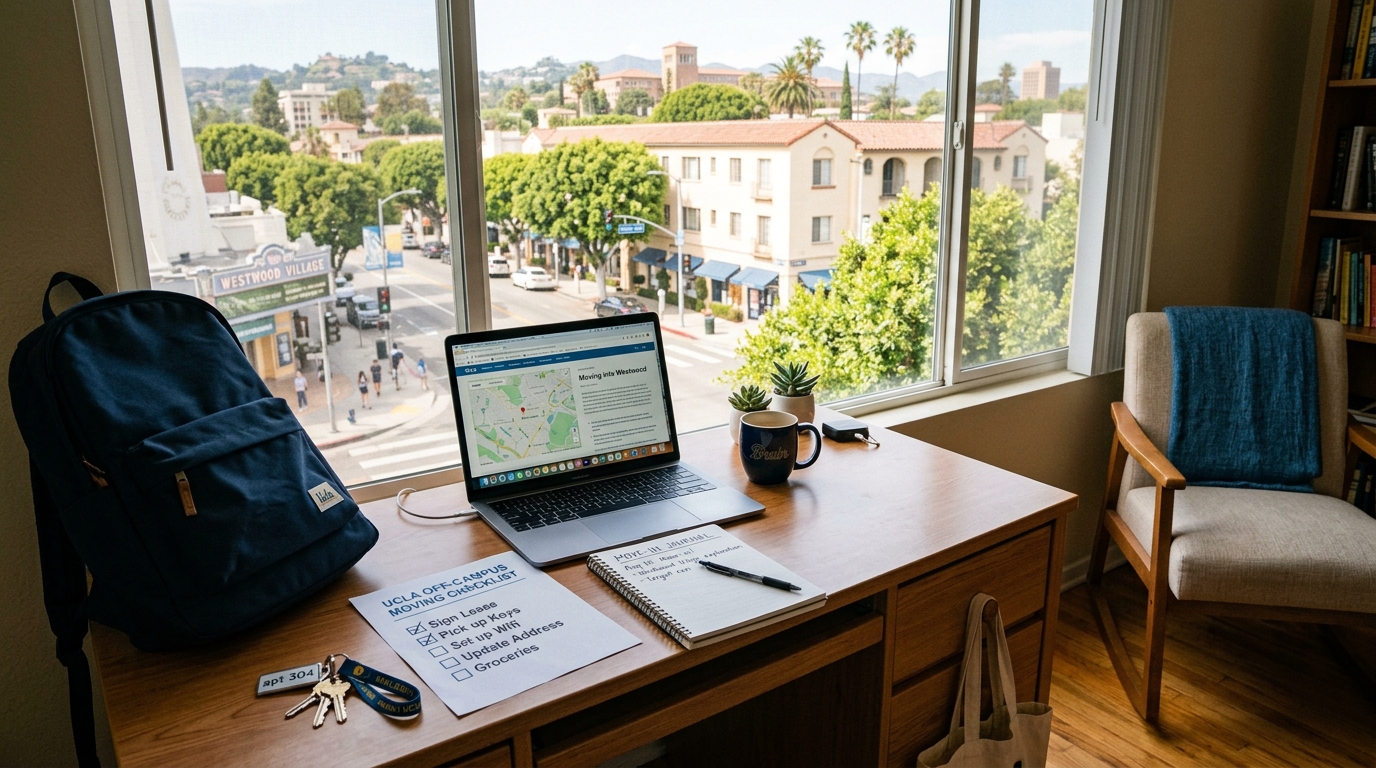
Finding UCLA off-campus housing can feel exciting, but it can also feel overwhelming if you are not sure where to start.
For many UCLA students, housing decisions affect more than where they sleep. The right home can shape commute time, study routines, monthly expenses, roommate expectations, and overall student lifestyle.
Off-campus housing can offer more independence than campus housing, but it also comes with more planning. Students may need to compare rent, lease terms, utilities, furniture, parking, transportation, and neighborhood fit before choosing.
For students comparing apartment living close to UCLA and Westwood, this guide explains the most important things to know before starting the search.
Quick Answer: What Is UCLA Off-Campus Housing?
UCLA off-campus housing refers to housing located outside university-operated campus residences. It can include apartments, shared housing, student-focused communities, and private rentals near UCLA. Many students consider off-campus options because they want more independence, more control over their routine, or a different living setup than traditional campus housing. The best option depends on budget, proximity to campus, commute, roommate preferences, lease terms, amenities, and monthly costs. Students should compare housing carefully before applying.
Why Students Choose to Live Off Campus
Students choose to live off campus for different reasons.
Some want more independence. Others want more living space, a quieter atmosphere, a specific roommate setup, or more flexibility with daily routines.
Living off campus can also feel more practical for transfer students, graduate students, and students who already know what kind of schedule works best for them. It may offer more control over meals, study time, guests, and personal space.
Common reasons students consider living off-campus include:
- More independence: Students can often create routines that feel less tied to residence hall structure.
- Roommate choice: Choosing who you live with can make the housing experience feel more comfortable.
- Flexible routines: Cooking, studying, resting, and social plans may feel easier to manage.
- More living space: Some apartment layouts may offer more room than traditional dorm setups.
- Lifestyle fit: Students can choose a setting that better matches their study habits and daily needs.
- Neighborhood access: Living near restaurants, coffee shops, transit, and errands can support a fuller routine.
Off-campus living is not automatically better for every student. It simply offers a different type of housing experience.
Types of Off-Campus Housing Near UCLA
Housing near UCLA can come in several forms.
Some students look for private apartments. Others prefer shared spaces, furnished units, or multi-bedroom homes with roommates. The right choice depends on budget, privacy needs, move-in timing, and how much responsibility the student wants.
Studio and One-Bedroom Apartments
Studio and one-bedroom apartments can work well for students who want more privacy.
A studio usually combines the bedroom, living space, and kitchen area into one main unit. A one-bedroom apartment offers more separation, which may be useful for students who want a clearer divide between sleep, study, and relaxation.
These apartment types may cost more than shared housing, but they can offer more control over noise, guests, and daily routines.
Shared Apartments With Roommates
Shared apartments are common among students who want to lower monthly costs.
In this setup, roommates may split rent, utilities, internet, and other shared expenses. This can make off-campus apartments more realistic for students who want to stay near campus without paying for a private unit alone.
Before choosing a shared apartment, students should discuss cleaning, guests, quiet hours, shared supplies, and payment deadlines.
Fully Furnished Student Housing
Fully furnished housing can reduce move-in stress, especially for incoming students, transfer students, and students moving from outside Los Angeles.
A furnished apartment may already include major basics such as a bed, desk, seating, or kitchen items, depending on the property. This can help students avoid buying or moving large furniture.
However, students should confirm exactly what is included before assuming the unit is move-in ready.
Multi-Bedroom Apartment Options
Multi-bedroom apartments can offer flexibility for roommate groups.
A larger unit may include two or more bedrooms, shared living areas, and shared kitchen space. This can work for students who want a balance of privacy and shared costs.
When comparing available apartment floor plans near UCLA, students should look at bedroom count, layout, storage, natural light, and whether the space supports studying, cooking, and daily routines.
Best Neighborhoods for UCLA Students
Location is one of the biggest factors in a UCLA housing search.
A good neighborhood fit can affect commute time, access to campus, dining, errands, transit, and overall comfort. Students should think about how they will move between home, class, work, and daily needs.
Westwood for Walkability and Convenience
Westwood is one of the most common areas students consider because of its proximity to UCLA campus.
Depending on the exact location, students may have access to Westwood Village, coffee shops, restaurants, grocery options, and walkable routes to class or campus-adjacent activities.
For students who want to understand the local setting better, this guide on what to expect when living in Westwood Los Angeles can help explain the neighborhood experience.
Midvale and Student-Focused Housing Areas
Midvale and nearby student-focused areas may appeal to students who want housing near UCLA with a more residential feel.
These areas can vary by building, block, and distance from campus. Students should compare walking time, transportation access, noise levels, and the overall atmosphere before deciding.
A location that works well for one student may not work for another.
Brentwood for a Quieter Residential Atmosphere
Brentwood may appeal to students who want a quieter residential setting and do not mind being farther from campus.
This area may feel different from Westwood because daily routines may require more planning around transportation, commute time, and errands. Students should compare distance, budget, and accessibility carefully.
A quieter setting can be helpful, but it should still support academic and daily needs.
Areas With Easy Access to UCLA
Some students look outside Westwood but still prioritize easy access to UCLA.
In that case, transportation becomes more important. Students may compare bus routes, biking options, walkability, ride-share costs, or driving time.
Before choosing a location, ask:
- How long is the commute to campus? Consider your real class or work schedule.
- Can you walk or bike comfortably? Route comfort matters as much as distance.
- Is public transit nearby? Bus access can make some locations more practical.
- Are errands close? Groceries, pharmacy stops, and food options affect daily convenience.
- Does the atmosphere fit your routine? A residential setting may be quieter, while a more active area may feel more social.
The best neighborhood depends on your priorities, not just distance.
How Much Does UCLA Off-Campus Housing Cost?
The cost of UCLA off-campus housing can vary widely.
Rent may depend on location, apartment size, bedroom count, lease timing, amenities, and whether utilities are included. A private apartment usually has a different price than a shared bedroom or multi-bedroom roommate setup.
Students should plan for more than rent.
Monthly expenses may include:
- Rent: The main monthly housing cost.
- Utilities: Electricity, gas, water, trash, or internet may be separate.
- Parking: Some students may need to pay for parking if they bring a car.
- Food: Off-campus students may cook more or spend differently than students using dining plans.
- Furniture: Unfurnished apartments may require a bed, desk, chair, storage, and kitchen supplies.
- Move-in costs: Deposits, application fees, first payments, and moving supplies can add up.
- Transportation: Bus passes, rideshare, bike supplies, gas, or parking may affect the budget.
Students should ask whether utilities are included and what costs are billed separately. A lower advertised price may not always mean a lower total monthly cost.
What to Know Before Signing a Lease
A lease is different from a dorm contract.
When students move into off-campus housing, they usually take on more responsibility as a tenant. That means reading the lease carefully before signing and understanding what is expected.
Important lease details to review include:
- Lease length: Confirm the start date, end date, and renewal options.
- Monthly rent: Make sure the price matches what was discussed.
- Utility responsibilities: Ask what is included and what must be paid separately.
- Roommate agreements: Clarify how rent, bills, cleaning, and shared spaces will be handled.
- Security deposit: Understand the deposit amount and conditions.
- Move-in requirements: Ask about payment timing, keys, inspections, and insurance.
- Listing details: Confirm that the apartment, unit features, and availability match what was advertised.
Students should never sign quickly just because a listing looks good. A strong housing choice should make sense financially, practically, and legally.
Transportation and Getting Around UCLA
Transportation can affect the value of off-campus housing.
A lower-cost apartment may not feel like a better choice if the commute is long, expensive, or stressful. A location with easy access to campus may be worth considering if it saves time during busy academic weeks.
Students may use:
- Walking: Helpful for students living close to campus or Westwood Village.
- Bike routes: A bike can make short trips easier, depending on route comfort and storage.
- Bus service: Local bus routes can help students move around the area.
- Big Blue Bus: Some students may use Big Blue Bus routes for travel around Westwood, Santa Monica, and nearby areas.
- Ride-share: Useful occasionally, but frequent use can become expensive.
- Driving: A car may add costs for gas, maintenance, parking, and insurance.
Before choosing housing, test the commute during the time of day you expect to travel. A route that seems easy on a map may feel different during morning, afternoon, or evening traffic.
Which Amenities Matter Most for UCLA Students?
Amenities should support student life, not just look good on a list.
The best amenity for one student may not matter to another. A student who studies at home may value quiet workspaces, while another may care more about laundry, parking, or package support.
Useful apartment amenities may include:
- Study-friendly spaces: Helpful for students who need quiet areas outside their bedroom.
- Fitness access: Convenient for students who want workouts close to home.
- Laundry access: A practical feature that can save time each week.
- Parking: Important for students who bring a car.
- Furnished options: Helpful for students moving from far away.
- Package management: Useful for deliveries, supplies, and online orders.
- Controlled access: Can support a more managed residential experience.
- Shared outdoor space: Helpful for fresh air, breaks, or casual downtime.
Students comparing apartment amenities designed for student convenience should focus on what they will actually use.
A long amenity list matters less than features that improve daily life.
Common Mistakes Students Make When Searching for Housing
Students often make housing decisions under pressure.
High demand near UCLA can make the search feel rushed, but moving too quickly can lead to problems later. It is better to prepare early and compare options carefully.
Common mistakes include:
- Waiting too long: Good housing options may become limited during busy periods.
- Only comparing rent: Utilities, parking, transportation, and move-in costs also matter.
- Ignoring commute time: A longer commute can affect class schedules and daily energy.
- Not reading the lease: Lease terms can affect renewal, payments, guests, and responsibilities.
- Choosing the wrong roommate setup: A poor roommate match can make daily life harder.
- Skipping tours: Photos may not show noise, storage, natural light, or building condition.
- Not preparing documents: Students may need identification, income details, guarantor information, or deposits.
- Overpaying for unused amenities: Pay attention to features you will realistically use.
A better search starts with clear priorities.
How to Find the Right UCLA Off-Campus Housing
Finding the right housing starts with knowing what matters most to you.
For some students, the top priority is being close to campus. For others, it is price, privacy, a specific bedroom setup, a quieter atmosphere, or easy transportation.
Use this simple process:
- Set your budget: Include rent, utilities, parking, furniture, and move-in costs.
- Choose your location: Compare Westwood, Midvale, Brentwood, and other areas near UCLA.
- Decide on apartment type: Consider private, shared, furnished, or multi-bedroom options.
- Review commute: Check walking, bus, bike, or driving routes.
- Compare amenities: Focus on features that support student life.
- Prepare documents: Have application materials ready before touring.
- Read the lease: Understand responsibilities before signing.
- Tour when possible: Confirm the unit, building, location, and layout.
The right choice should support both academic life and personal comfort.
Explore Apartment Living Near UCLA and Westwood
UCLA off-campus housing can give students more independence, flexibility, and control over their daily routine.
The best option depends on your budget, commute, roommate plans, lease comfort, amenities, and preferred neighborhood atmosphere. Students should compare options early and think beyond the monthly rent.
When you are ready to compare layouts, location, and amenities in person, schedule a personalized apartment tour to see which housing option fits your routine.
Frequently Asked Questions About UCLA Off-Campus Housing
What is considered off-campus housing at UCLA?
Off-campus housing at UCLA generally means housing located outside university-operated residences. It may include private apartments, shared apartments, student-focused housing, or rentals near campus.
How much does UCLA off-campus housing typically cost?
Costs vary based on location, apartment type, bedroom count, amenities, lease timing, and whether utilities are included. Students should compare rent, utilities, parking, transportation, and move-in costs.
Which neighborhoods are most popular for UCLA students?
Westwood is one of the most common areas because of its proximity to UCLA campus. Students may also compare Midvale, Brentwood, and other areas with access to campus by walking, biking, bus, or driving.
Is living off campus cheaper than campus housing?
Living off campus may be cheaper or more expensive depending on rent, roommates, utilities, food, parking, and transportation. Students should compare the full monthly cost instead of only looking at rent.
What amenities should students prioritize?
Students should prioritize amenities that support daily routines, such as laundry, study spaces, parking, package services, furnished options, fitness access, and convenient transportation access.
How early should students start searching for housing?
Students should start researching as early as possible, especially during high-demand leasing periods. Starting early can provide more time to compare neighborhoods, budgets, lease terms, and apartment options.
Source / Accuracy Note
This guide was created to help renters understand UCLA off-campus housing using local context, official property information, renter-focused planning, and relevant source references. Rental prices, availability, amenities, commute times, transportation routes, lease requirements, and local conditions can change, so readers should verify current details before making a decision.