
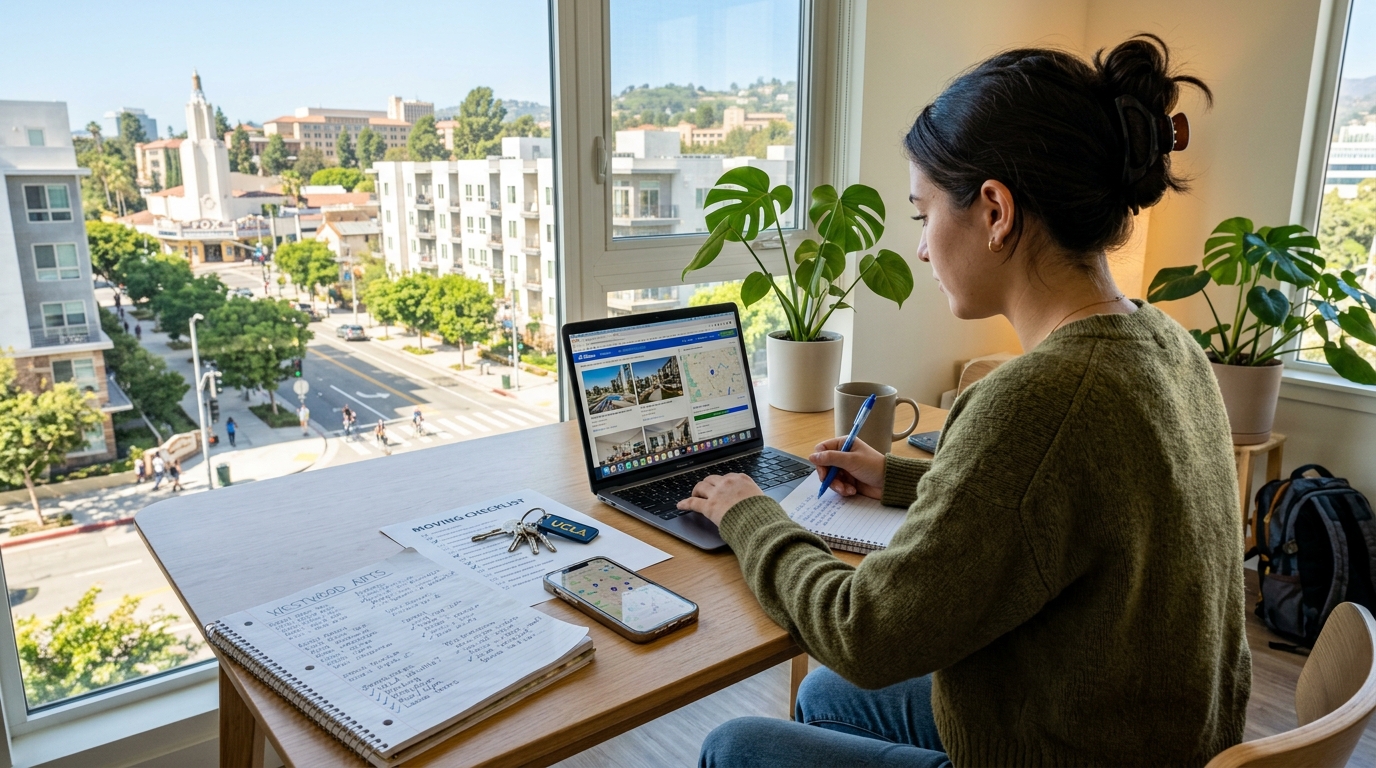
Finding an apartment in Westwood can feel exciting, but it can also feel competitive if you do not know where to start.
The area is popular with UCLA students, graduate students, medical residents, young professionals, and renters who want access to West Los Angeles. That means apartments for rent can move quickly, especially when demand is high.
A structured apartment search can make the process easier. Instead of only browsing listings, renters should understand rent expectations, location priorities, lease terms, amenities, and application requirements before applying.
For renters comparing apartment living close to UCLA and Westwood Village, this guide walks through the process step by step.
Quick Answer: How Do You Find an Apartment in Westwood?
To find an apartment in Westwood, start by setting a realistic rent budget, then compare the rental market, location, listings, amenities, and lease terms. Focus on areas that support your commute, lifestyle, and access to UCLA or Westwood Village. Prepare documents like proof of income, bank statements, identification, and security deposit funds before applying. Because the Westwood apartment market can be competitive, renters should tour quickly, ask detailed questions, review the lease agreement carefully, and compare each option based on total monthly cost, not just rent.
Step 1: Understand the Westwood Rental Market
Before starting your apartment search, it helps to understand why Westwood is in high demand.
Westwood sits near UCLA, medical centers, Westwood Village, Wilshire, and major West Los Angeles destinations. Because of that location, the rental market can attract students, professionals, faculty, staff, and relocating renters at the same time.
This can affect rent, availability, and how quickly a listing receives interest. Due to high demand, some apartments may lease faster during peak moving periods.
When reviewing the market, consider:
- Average rent: Use average rent only as a planning guide because prices can change by building, layout, and timing.
- Seasonality: Demand may rise around academic calendars, job relocations, and major move-in periods.
- Location: Homes near UCLA or Westwood Village may attract more renter interest.
- Apartment type: Studios, one-bedroom homes, and shared layouts can each move differently.
- Competition: In a strong LA rental market, being prepared can help you act faster.
Rent in Westwood can vary widely, so avoid assuming every apartment will match the same price range. Current availability, lease terms, and included features matter.
Step 2: Determine Your Budget Before Apartment Hunting
A good apartment hunting plan starts with a realistic budget.
Monthly rent is usually the largest cost, but it is not the only number to consider. A renter should also plan for utilities, parking, internet, move-in costs, and the security deposit.
If the apartment is furnished, your upfront setup costs may be lower. If it is unfurnished, you may need to budget for a bed, desk, seating, cookware, storage, and basic household items.
Before searching for apartments, estimate:
- Monthly rent: Set a comfortable range before touring.
- Utilities: Ask whether water, electricity, gas, trash, or internet are included.
- Parking: Confirm whether parking is available and whether it costs extra.
- Security deposit: Prepare for upfront funds before applying.
- Move-in costs: Budget for application fees, moving supplies, furniture, and first payments.
- Furniture needs: Decide whether you prefer a furnished or unfurnished setup.
- Commute costs: Include gas, transit, rideshare, or parking near work or school.
A clear budget helps you compare listings more fairly. It also prevents you from choosing a place that looks affordable online but feels difficult once all costs are included.
Step 3: Choose the Right Location Within Westwood
Location can shape your daily routine just as much as the apartment itself.
Westwood is not only about being near UCLA. Renters may also compare access to Westwood Village, Wilshire, Santa Monica, Century City, public transit, work locations, and everyday errands.
A home near Westwood Village may be helpful if you want walkable access to coffee shops, restaurants, errands, and campus-adjacent activity. A location closer to Wilshire may feel more useful for certain commutes or professional routines.
To understand the area better, review what to expect when living in Westwood Los Angeles before narrowing your search.
When choosing location, compare:
- Proximity to UCLA: Helpful for students, staff, faculty, and medical residents.
- Westwood Village access: Useful for dining, errands, coffee shops, and everyday routines.
- Commute: Consider daily travel time to work, class, or appointments.
- Santa Monica access: Helpful for renters who spend time toward the coast.
- Century City access: Valuable for professionals working nearby.
- Public transportation: Public transit may reduce driving needs depending on your route.
- Walkability: Being near errands can make daily life easier.
The best location depends on your routine. A slightly higher rent may make sense if it reduces commute stress and saves time each week.
Step 4: Compare Apartment Types and Floor Plans
Once you understand your budget and location needs, compare apartment types.
The right floor plan depends on how you live, work, study, and relax. A student apartment may prioritize simplicity and proximity, while a professional renter may care more about privacy, storage, or work-from-home space.
Common apartment type options may include:
- Studio apartments: Useful for renters who want a simpler setup and lower maintenance.
- One-bedroom apartment options: Helpful for renters who want more privacy and separation.
- 1-bedroom apartment layouts: Often preferred by renters who need a dedicated bedroom and living area.
- Shared apartments: May help reduce monthly costs when roommates split expenses.
- Larger layouts: Useful for renters who need a home office, more storage, or shared living space.
When comparing available apartment floor plans in Westwood, think beyond square footage.
Ask yourself:
- Does the layout support your daily routine?
- Is there enough storage?
- Will the space work for studying or remote work?
- Does the kitchen fit your cooking habits?
- Is the bedroom separate enough for rest?
- Will the apartment still work after the first few months?
The best floor plan is not always the largest. It is the one that fits your lifestyle with the least daily friction.
Step 5: Decide Which Amenities Matter Most
Amenities can improve daily life, but only if they match how you actually live.
Some renters value a rooftop because it provides outdoor space without leaving home. Others care more about parking, package services, laundry access, or a quiet place to work.
Before paying more for an amenity package, decide which features you will use regularly.
Useful amenities may include:
- Rooftop space: Helpful for fresh air, views, or casual downtime.
- Fitness access: Convenient for renters who want workouts close to home.
- Study or work areas: Useful for students, remote workers, and busy professionals.
- Parking: Important if you own a car or commute regularly.
- Laundry access: In-unit or convenient laundry can save time.
- Package support: Helpful for renters who order online often.
- Controlled access: Can support a more managed residential experience.
- Utility setup clarity: Knowing what is included can make budgeting easier.
Review apartment amenities designed for modern Westwood living and compare them against your actual routine.
A feature is only valuable if it improves your day-to-day experience.
Step 6: Prepare Your Rental Application Before You Apply
In a competitive rental market, being prepared can make a difference.
A landlord or leasing team may ask for documents that show identity, financial readiness, and rental responsibility. Requirements can vary, so renters should confirm what is needed before applying.
Common application items may include:
- Proof of income: Pay stubs, offer letters, or other income documentation may be requested.
- Bank statements: Some landlords may ask for bank statements to support the application.
- Identification: A valid government-issued ID is commonly needed.
- Rental history: Previous addresses or landlord references may be requested.
- Guarantor details: Students or first-time renters may need a guarantor depending on requirements.
- Application fee: Some properties may charge a fee to process the application.
- Security deposit funds: Be ready for deposit requirements if approved.
Preparing your application in advance can help you move faster when you find a strong option.
Do not wait until after a tour to gather your documents. In Westwood, good listings may not stay available for long.
Step 7: Carefully Review the Lease Agreement
Before signing, read the lease agreement carefully.
A lease explains your responsibilities as a tenant, including rent due dates, move-in requirements, utility responsibilities, parking rules, renewal terms, and property policies.
Even if an apartment looks perfect, the lease terms should still fit your needs.
Review details such as:
- Lease length: Confirm the start date, end date, and renewal options.
- Monthly rent: Make sure the amount matches what was discussed.
- Utilities: Check what is included and what you must pay separately.
- Security deposit: Understand the amount, conditions, and return process.
- Parking rules: Confirm whether parking is included, assigned, or paid separately.
- Move-in requirements: Ask about keys, inspection, insurance, and payment timing.
- Tenant responsibilities: Understand maintenance reporting, guest policies, and community rules.
A lease agreement should not be rushed. Ask questions before signing if anything is unclear.
Step 8: Tour Apartments and Compare Your Options
Tours help renters see what photos cannot show.
During a tour, pay attention to the building condition, apartment layout, natural light, noise, storage, amenities, and commute convenience. Take notes so you can compare each apartment later.
When touring, look for:
- Condition: Check floors, walls, appliances, windows, and fixtures.
- Noise level: Notice street noise, hallway noise, or nearby activity.
- Natural light: Consider how the home feels during the tour time.
- Storage: Look at closets, cabinets, and kitchen space.
- Amenities: Visit the features you expect to use.
- Commute: Think about how it would feel to leave for work, school, or errands.
- Move-in readiness: Ask when the apartment is available and what must happen before move-in.
Finding the right apartment is easier when you compare each home using the same criteria.
A renter may feel excited after one tour, but it is still smart to compare cost, layout, lease terms, and daily convenience before applying.
Common Apartment Search Mistakes to Avoid
Apartment hunting can be stressful, especially when listings move quickly.
Knowing common mistakes can help you avoid delays, extra costs, or choosing a place that does not fit your routine.
Avoid these issues:
- Waiting too long: High-demand areas can move quickly, especially near UCLA.
- Focusing only on rent: A lower rent may not be better if commute, parking, or utilities cost more.
- Ignoring lease terms: Read the lease before signing.
- Skipping the full budget: Include monthly rent, utilities, deposits, parking, and move-in costs.
- Not preparing documents: Missing proof of income or bank statements can slow your application.
- Overvaluing amenities: Do not pay more for features you will rarely use.
- Forgetting commute reality: Test the route or estimate travel time during your usual schedule.
- Applying too quickly: Acting fast matters, but you should still understand the apartment and lease.
A better apartment search is not just faster. It is more organized.
Explore Apartment Living Near UCLA and Westwood Village
Finding an apartment in Westwood is easier when you follow a clear process.
Start by understanding the rental market, setting your budget, choosing the right location, comparing floor plans, reviewing amenities, preparing application documents, and reading the lease carefully.
The best apartment should support your monthly budget, commute, move-in timing, and daily lifestyle.
When you are ready to compare options in person, schedule a personalized apartment tour and see how the location, layout, and amenities fit your routine.
Frequently Asked Questions About Finding an Apartment in Westwood
How early should I start looking for an apartment in Westwood?
Renters should start researching as early as possible, especially if they want to live near UCLA or move during a busy season. Starting early gives you more time to compare rent, locations, amenities, and lease terms.
What is the average rent in Westwood?
Average rent in Westwood can vary by apartment type, location, amenities, and market timing. Renters should use average rent as a planning guide and check current listings before making a decision.
What documents do landlords require when applying?
Landlords may request proof of income, bank statements, identification, rental history, references, application forms, and security deposit funds. Requirements can vary by property.
Are apartments near UCLA more competitive?
Apartments near UCLA can be competitive because students, faculty, staff, medical residents, and professionals may all search in the area. Availability may change quickly during high-demand periods.
Which amenities should renters prioritize?
Renters should prioritize amenities they will actually use, such as parking, laundry access, package services, rooftop space, study areas, fitness access, or convenient utility setup.
How long does it take to find an apartment in Westwood?
The timeline can vary depending on budget, availability, application readiness, and move-in date. Renters who prepare documents early and tour quickly may have an easier search.
Source / Accuracy Note
This guide was created to help renters understand how to find an apartment in Westwood using local context, official property information, renter-focused planning, and relevant source references. Rental prices, availability, amenities, commute times, lease requirements, application policies, and local conditions can change, so readers should verify current details before making a decision.